
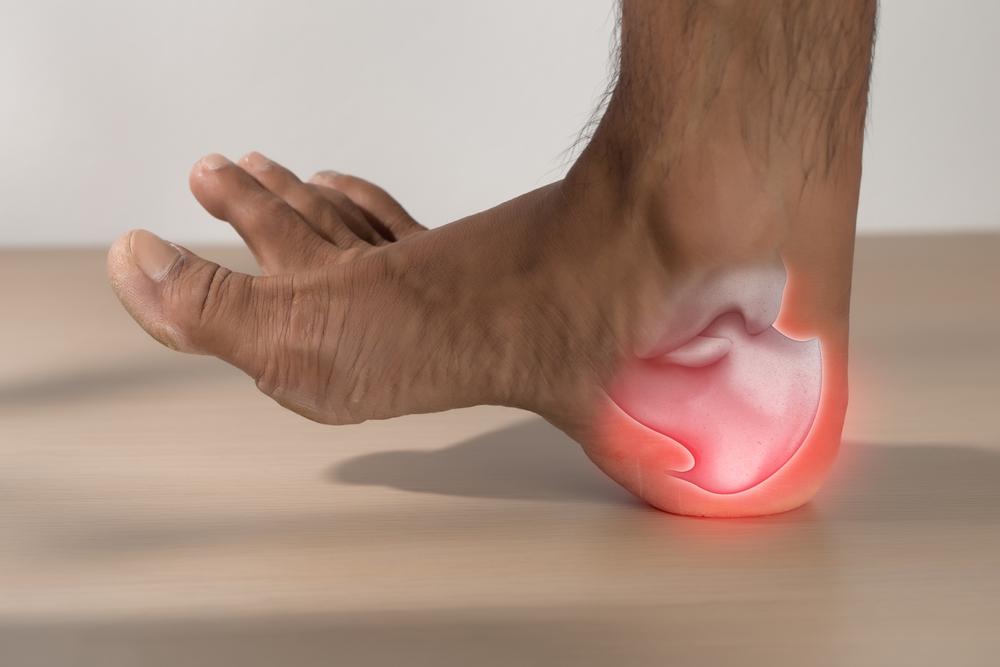

Heel pain when standing is a common problem that can interfere with your day-to-day life. You may feel a sharp or aching sensation in the bottom of your heel when you first get up or after standing for long periods. This discomfort often stems from issues in the soft tissues or structures connected to the heel bone. If the pain doesn’t go away or keeps returning, it can start affecting how you move, work, or exercise.
Common Causes of Heel Pain When Standing
Heel pain during weight-bearing often involves strain on the structures attached to the heel bone. These structures include the plantar fascia, the Achilles tendon, and various small muscles and ligaments in your foot. The most common diagnosis for this kind of pain is plantar fasciitis, followed by heel spurs and tightness in the back of the legs. The pain usually has a mechanical source, meaning it’s related to movement, posture, or overuse.
In many cases, the discomfort is worse during the first steps after rest and improves once the foot warms up. This pattern helps distinguish musculoskeletal problems from other conditions. If your pain fits this description, it’s likely to respond well to physical therapy or targeted exercises.
Plantar Fasciitis and Heel Spurs
Plantar fasciitis causes heel pain by inflaming or irritating the plantar fascia, a thick band of tissue that connects the toes to the calcaneus (heel bone). This tissue helps absorb shocks and support the arch of the foot. When it becomes overstretched or torn, standing or walking can become painful.
- Pain is usually sharp and located near the front of the heel.
- Symptoms tend to be most intense in the morning or after sitting.
- It may ease as you walk, then return later in the day.
Over time, this repeated stress can lead to a heel spur—a small bony growth where the plantar fascia attaches. A heel spur doesn’t always cause symptoms, but when it presses into surrounding tissue, it can add to the pain. Whether or not you have a visible spur, the source of the pain is usually the same: pulling or tension on that connective tissue.
Morning Pain and Post-Rest Discomfort
Pain that’s worse in the morning or after being off your feet is often linked to how the plantar fascia behaves during rest. When you sleep or sit for a while, the tissue tightens slightly. The first few steps then stretch it suddenly, causing discomfort.
- This pattern—sharp pain during the first steps—is one of the most typical signs of plantar fasciitis.
- Standing up after a long rest can cause the same flare-up.
- The pain usually lessens with movement as the tissue loosens.
These symptoms tell us the pain is more mechanical than inflammatory. It’s not caused by constant swelling or damage, but by how your body reacts to rest and weight-bearing. That’s why many people with this issue feel better as they move more.
Overuse from Standing or Activity Increase
Extended time on your feet without enough recovery can strain the plantar fascia. People who work on hard surfaces or walk more than usual often experience this. A sudden jump in activity, like starting a running routine or taking on a physical job, can also lead to pain.
This kind of heel pain is common in:
- Workers in manufacturing, retail, or healthcare.
- Athletes, especially runners or dancers.
- People returning to physical activity after a break.
Even wearing unsupportive shoes on hard floors can contribute to the problem. The pain usually builds gradually and worsens with continued standing or walking. It’s your body’s way of telling you that the tissue is under more load than it can handle.
Posterior Chain Tightness and Achilles Strain
Tightness in the posterior chain—including the calves, hamstrings, and lower back—can create tension that pulls on the Achilles tendon and plantar fascia. When these muscles are tight, the heel absorbs more of the stress, especially during weight-bearing activities.
- The calves and hamstrings act as shock absorbers.
- If they’re stiff, the stress shifts downward to the heel.
- Achilles strain increases the pull on the heel where it connects.
This tightness is often linked to poor stretching habits, intense physical activity, or sitting for long periods. If you feel tightness along the back of your legs along with heel pain, stretching these areas may help relieve the strain on your heel.
How Can You Treat Heel Pain When Standing
Treatment for heel pain that appears when standing depends on what’s causing the discomfort, how long it’s been going on, and how much it interferes with your daily life. For many people, early-stage pain responds well to self-care. The goal is to reduce strain on the heel, improve mobility in the foot and leg, and support recovery with targeted changes.
Home treatment often includes stretching, massage tools, icing, and footwear changes. If you’ve had symptoms for a few days or weeks, you can often manage them on your own. If the pain continues or returns frequently, professional care like physiotherapy or shockwave treatment may be needed.
Home Treatments
You can often manage heel pain at home by adjusting how you move and what you do for your feet. These strategies help reduce inflammation, relax tight muscles, and limit strain on the plantar fascia or Achilles tendon.
Stretching the Bottom of the Foot and Calves
Stretching targets the muscles and tissues that pull on your heel and contribute to pain. By increasing flexibility in your calves and the bottom of your foot, you reduce tension on the plantar fascia and Achilles tendon.
Start with:
- Calf stretches against a wall, holding for 30 seconds at a time.
- Seated towel stretches, where you loop a towel around the ball of your foot and gently pull back.
- Toe curls and foot arches, done sitting to warm up the plantar fascia.
These movements improve circulation and flexibility. They are especially useful if your heel pain worsens after sleep or sitting.
Using a Golf Ball or Ice Cylinder for Rolling
Massage tools help warm up tight tissues and reduce discomfort. Rolling a golf ball under your foot applies pressure to the plantar fascia and can ease pain before walking or standing. An ice cylinder helps with inflammation and pain relief.
Use the following:
- Golf ball: Roll under the arch for 1–2 minutes per foot. Do this before getting up in the morning.
- Ice cylinder: Freeze water in a plastic bottle or small container. Roll under your foot for 5–10 minutes, especially after activity.
- Ziploc bag with ice: A simple option for short sessions of icing while seated.
These tools let you target the painful area with pressure or cold therapy in a way that’s easy to control at home.
Footwear Adjustments and Orthotics
What you wear on your feet directly affects how much stress your heel absorbs. Shoes without structure or support increase the load on your plantar fascia and heel. Switching to better footwear can reduce that strain.
Tips:
- Choose shoes with firm arch support and a cushioned heel.
- Avoid soft, flat soles and flip-flops.
- If you have rigid feet, look for shoes that allow movement.
- If you have mobile feet, look for shoes that provide more structure.
- Consider orthotics for long-term support, especially if you’re on your feet all day.
Orthotics can be custom or over-the-counter, depending on your needs. They help by aligning the foot properly and absorbing impact with each step.
Rest, Icing, and Controlled Movement
Giving your heel time to rest is part of recovery, but complete inactivity isn’t usually helpful. Instead, limit activities that make the pain worse, and focus on movements that maintain circulation and reduce stiffness.
Follow this general approach:
- Reduce standing or walking time, especially on hard floors.
- Apply ice several times a day for 10–15 minutes.
- Do gentle mobility work, such as ankle rolls or foot flexion, to keep tissue from tightening during rest.
This helps prevent the plantar fascia from becoming stiff while controlling inflammation at the same time.
Seeing a Professional
If your heel pain isn’t improving with home care or keeps coming back, it may be time to see a healthcare professional. Pain that lasts longer than a few weeks, gets worse, or starts affecting how you move or sleep should be assessed in person. A physiotherapist, chiropractor, or chiropodist can help confirm the cause of the pain and create a treatment plan that fits your needs.
Professional treatment often includes a combination of movement assessment, hands-on therapy, and specialized techniques like shockwave therapy or laser therapy. These options aim to reduce pain, improve function, and prevent recurrence. They’re especially useful if your pain is tied to tight muscles, long-term overuse, or structural issues in the foot.
When Should You Seek Professional Treatment?
You should get your heel pain looked at if:
- It’s lasted longer than three weeks with no improvement.
- Pain makes it hard to stand, walk, or work normally.
- There’s no relief after using stretching, ice, or proper shoes.
- Pain occurs not only during activity but also at rest.
- There’s new swelling, redness, or heat in the area.
In these cases, waiting may allow the condition to become more chronic and harder to treat. Early intervention often leads to a quicker recovery and reduces the chance of long-term problems.
What Treatments Can You Get?
A professional may use several treatments, depending on what they find in your assessment. Treatment is guided by how long the pain has been present, how severe it is, and how your body responds.
These treatments can include:
- Shockwave therapy: Delivers thousands of small mechanical pulses to promote blood flow and break up scar tissue in the plantar fascia. Very helpful for chronic plantar fasciitis or heel spurs.
- Laser therapy or ultrasound therapy: Used to support healing in soft tissues and reduce inflammation.
- Hands-on therapy: Includes muscle release, stretching, and joint mobilization to reduce tension in the posterior chain and foot.
- Targeted exercises: A structured program to strengthen the calf, foot arch, and Achilles tendon. This includes isometric, concentric, and eccentric muscle loading.
- Acupuncture: May be used for pain control or muscle release in select cases.
- Taping or orthotic advice: Some clinics provide taping strategies or refer for custom foot supports.
The goal of treatment is to improve movement, reduce pain, and make sure you return to your usual activity without setbacks.
How Long Does it Take to Heal?
The recovery timeline depends on how long the pain has been present and how your body responds to treatment.
- If symptoms have been present for less than 3 weeks, many people improve within 2 to 3 weeks of treatment.
- For symptoms that have lasted more than 3 months, expect a longer treatment plan. Professionals usually start with 3 weeks of care and then reassess.
- If there’s at least 50% improvement after 3 weeks, you may fully recover within another 3 weeks.
- If improvement is slow (around 10%), recovery may take up to 20 weeks.
Starting treatment early gives you the best chance of avoiding a long-term issue. Delaying care can lead to the pain becoming more resistant to treatment and more disruptive to your life.
PinPoint Health Can Help
At PinPoint Health, experienced professionals provide care that’s focused on reducing pain and restoring movement. Whether your heel pain is new or ongoing, our clinics offer a range of services including physiotherapy, chiropractic care, massage therapy, and shockwave treatment.
We begin with a full assessment to understand what’s causing your pain. From there, we build a treatment plan based on what’s been shown to work—targeting the source of the problem instead of just masking the symptoms. You’ll learn how to move in ways that protect your heel, stretch and strengthen the right muscles, and avoid a return of the problem later.
We have locations in:
- Toronto
- Etobicoke
- Brampton
- Markham
- Maple
- Mississauga
- Newmarket
- Woodbridge
- Oakville
- Vaughan